Showing posts with label Sparkling Wines. Show all posts
Saturday, January 26, 2013
Wednesday, December 12, 2012
LEMON HEAD -- Bartender PANDAT
Sweet, fizzy, and tart, like your favorite candy in a glass.

1. Squeeze lemon into a chilled cocktail shaker.
2. Add sugar and water to lemon.
3. Stir.
4. Pour into a cocktail glass.
5. Fill cocktail glass with shaved ice.
6. Add champagne.
7. Stir.
--Bartender PANDAT

- 1/2 fresh lemon
- 1 teaspoon powdered sugar
- 1 teaspoon water
- 2 1/2 ounces champagne
1. Squeeze lemon into a chilled cocktail shaker.
2. Add sugar and water to lemon.
3. Stir.
4. Pour into a cocktail glass.
5. Fill cocktail glass with shaved ice.
6. Add champagne.
7. Stir.
--Bartender PANDAT
Thursday, October 18, 2012
Can we make white wine with the Red grapes?
one of my colleague asked me this question and the answer is YES off-course we can make it.
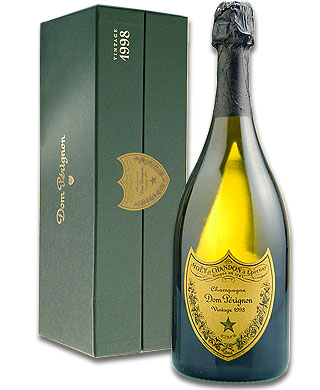
Skin color determines wine color. The French term for it is blanc de noirs and most often refers to champagne that is made using the Pinot Noir grape.
To clarify the point: It is the skin that gives wine it's color not the pulp.If a red grape is crushed and the skin does not spend any time in contact with the juice a white wine will be the result,. If the skin and juice do spend a lot of time together a red wine will be the result.
In Champagne, Two of the three grapes used are black... namely Pinot Noir and Pinot Meunier. Only the third grape is white and it is Chardonnay. Most Champagne uses all three, but you can also get Blanc de Noir which only uses the two Pinots or, conversely, Blanc de Blanc which is 100% Chardonnay.
Other fizz may vary from this of course, but then they are not Champagne.
i like when someone asks me questions because by that i also get the chance to increase my knowledge.
if u have some more query than feel free to ask i'll be very grateful to you...
gud nyt- keep smile
Friday, July 27, 2012
PROCESS OF MANUFACTURING OF WINES
After having brief knowledge about wines and grapes i am going to share the different stages of the wine manufacturing.
each and every stage is very important and should done nicely to get the good wine. the stasges are as follows:-
- Crushing/De-stemming:- The harvested grapes are dumped into a large HOPPER called crusher which cracks the grapes, and allowing the juice to flow.
in this process the stems of the grapes separated which then again sent to the grapes farm and used as the fertilizer. the crushed grapes and the juice are kept toghether.
- Fermentation:- In this process, yeast converted natural sugar into ethyl alcohol and CO2. this natural yeast is called as SACCHAROMYCES CEREVISIAE. The temperature increases during this process and the ideal temperature should be from 15 to 18' c. To cool the vats by cold water running through the metal coils inside the vats. and this process continues till all sugar is converted into the alcohol. all the casks are well sealed to avoid the oxidation.
- Racking:- It is a natural clarifying process that aids in settling suspended particles in the wine and removing them from contact with it. After the fermentation process the young wine is full of impurities and sediments that are called LEES. All the impurities settle down after fermentation stops and then the wine is transferred into another casks and filled to the brim (edge of the cask) and sealed well to avoid the oxygen to contact with the wine.
- Finning:- This process is done to obtain the clarity in wine. the impurities are mixed with the wine even after the racking process so to extract them this process is done. And by this the stability of wine also increases over a period. in this process we can use the finning agents such as:- Egg white, gelatin isinglass (Bladder of sturgeon) and the OX blood. This also makes the wine bright and clear.
- Maturation and Ageing:- This is the process of Ageing when the wine becomes Mellow. For this the wine kept in the casks and the air circulates through the pores of the cask which makes the wine mature. And when the wine is fully mature its qualtiy starts to decline. the process of maturation continues till the bottling. After a certain time the wine changes its color. White wines changes to greenish to golden straw colour and the red wines into purple to garnet colour.
- Blending:- In this process, different qualities of wine are mixed to produce a standard quality wine. Vintage wines are not blended but to bring up the standard quality of wine of different years, they are mixed with vintage wines to produce the standard quality of wine.
- Bottling:- Before the bottling of wines all the equipments and bottles are sterilized by passing sulphur dioxide and the washing in boiling water. the cork is also sterilize so that it cannot spoil the wine. first put the cork in the bottle and then dip the neck of the bottle into wax which makes it air tight and then wrapped into the metal foil.
This is the process of making wines. This post is definitely helpful to you .It is the brief detail and if you want the details in explain you can send me the mail or contact with me. thanks to you all.
Wednesday, July 25, 2012
WINE
Its being a long time i had not posted any post and i feel sorry for that. but not to worry i am back with lots of information.one of my buddy ask me about the wines so i want to share about the WINES.
Wine is basically a fermented alcoholic beverage which is usually made from the grapes. its origin is egypt and spread from Mesopotamia to Italy, Spain, France and then UK.
wines are classified in four categories:-
1. Still wines
2. Sparkling wines
3. Aromatised wine
4. Fortified wine
- Still Wines:- These wines made by the fermentation of grape juice and the alcohol strength is varies from 9% to 15%.this includes red wines, white wines and the rose wine.
- Sparkling Wines:- The wines which contains carbon dioxide (CO2) is known as sparkling wines.
Champagne is most known sparkling wine which comes from the Chompagne region of France.
- Aromatised Wine:- These wines are produced with the addition of herbs. the alcohol strength is 15% to 22%. Vermouth is the best known aromatised wine.
- Fortified Wine:- The wines in which the brandy is added to increase the alcoholic strength are known as Fortified wines. Brandy can be added before or during, during or after the fermentation.
slcoholic strenght - 15% to 22% GL
Subscribe to:
Posts (Atom)